


How Infrastructure-Led Design Is Rewriting Control, Trust, and Global Mobility
Once an afterthought, payments now play a crucial role in managing risk and value for wealth and asset managers. As clients expect smarter digital solutions and the freedom to move their money globally, old payment systems can no longer deliver the control, security, and flexibility that today’s organizations and their clients require.
As a result, leading financial institutions are moving away from a patchwork of separate card programs and embracing a more unified, streamlined payment infrastructure.
ViaCarte helps drive this change by offering an infrastructure-first payments operating system for wealth management. By combining hybrid card technology, issuer-controlled digital wallets, embedded security, and programmable value, ViaCarte enables institutions to support global money movement without compromising trust or control.
Key Takeaways
- Payments are evolving from operational tools into strategic infrastructure for wealth management.
- Hybrid card technology enables adaptive, multi-rail payment execution across global use cases.
- Issuer wallets centralize control, visibility, and governance across cards and currencies.
- Tokenization embeds security directly into payment infrastructure, supporting compliance at scale.
- Programmable value transforms rewards into relationship-building capabilities for wealth clients.
How Infrastructure-Led Design Is Rewriting Wealth Management
Wealth management is undergoing a quiet transformation not driven by new asset classes or investment strategies, but by something more fundamental: how capital moves.
For decades, payments sat at the margins of wealth strategy. They were treated as operational utilities, sufficient for a world where clients were regionally anchored, transaction volumes were predictable, and financial systems moved at a measured pace.
That world no longer exists.
Today’s wealth clients are globally mobile, digitally fluent, and accustomed to real-time access across borders. Capital moves continuously. Spending spans currencies and countries. In this environment, payments no longer sit downstream. They operate at the core of value proposition, the risk framework, and the trust relationship itself.
Yet many wealth and asset management firms continue to rely on payment architectures designed for a far less complex era.
Legacy Payment Infrastructure as a Risk Factor in Wealth Management
Traditional payment systems rarely fail in obvious ways. Cards still function. Transactions still clear. Reports reconcile eventually.
But beneath that apparent reliability lies a problem.
Single-rail card programs were never designed to support modern wealth behavior. Debit, credit, and prepaid products operate in isolation, each with its own constraints and limited adaptability once issued. As client needs change, organizations respond with manual approvals, exception handling, and operational workarounds.
This leads to what can be called an operability gap.
Wealth managers contend with settlement delays, unclear FX rates, inflexible spending limits, and fragmented oversight across payment instruments. Compliance workflows remain reactive and manual.
For high-net-worth clients, these failures prove anything but minor. They can block access, erode trust, and surface at precisely the moments when discretion and reliability matter most during travel, healthcare events, or time sensitive investment execution.
When payments lack adaptability, this gap becomes evident exactly when reliability is most critical.
From Payment Products to Payment Architecture
Leading wealth firms are changing how they think about payments.
Rather than selecting incremental product upgrades, firms now re-evaluating payment architecture that governs execution end-to-end. This mirrors trends across financial services. Many sectors are replacing single tools with full operating systems.
At the center of this evolution is a payments operating system model.
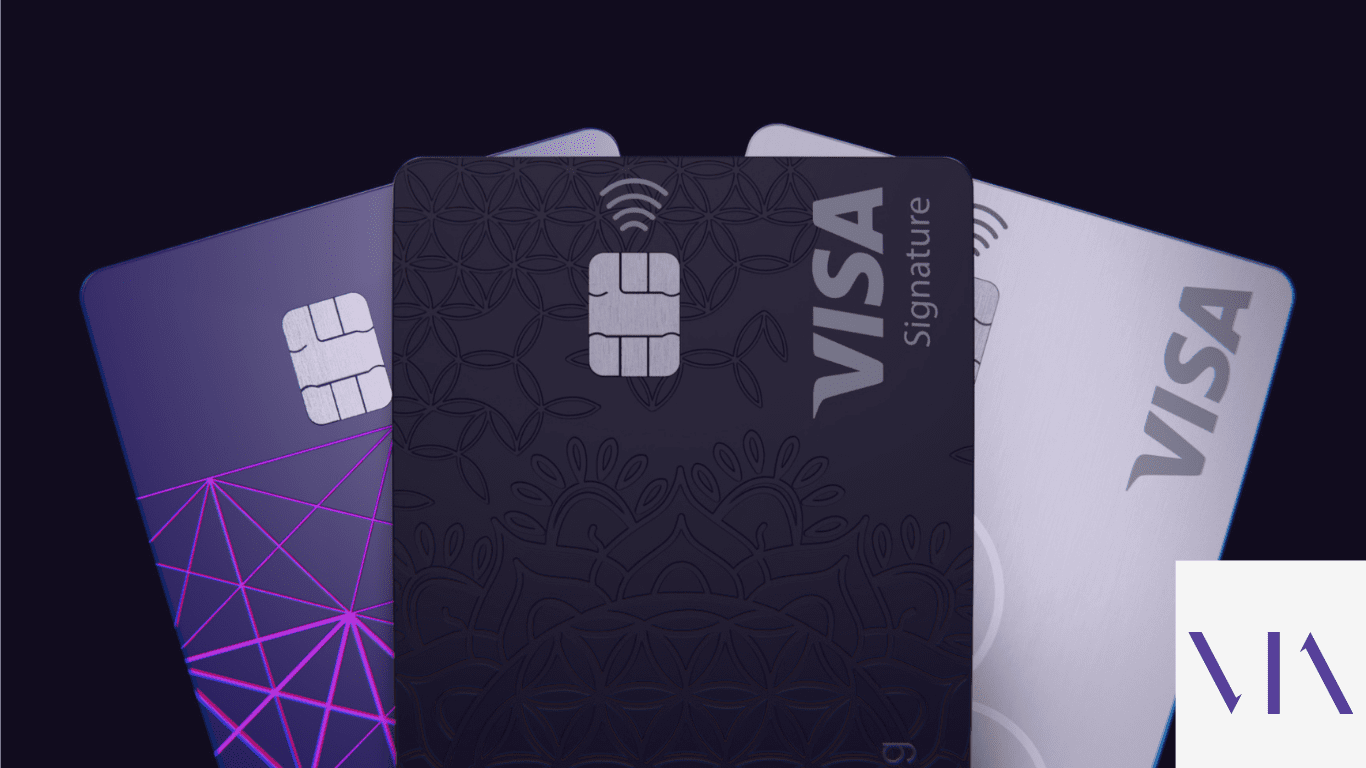
This architecture uses hybrid card technology ( a card that has the functionality of debit, credit, and prepaid, within a single experience) to eliminate rigid categorization. Debit, credit, and prepaid rails coexist within a single execution environment, allowing transactions to route based on context and limits. Physical and virtual cards operate on the same foundation, ensuring consistency across in-person and digital spend.
What matters is no longer which rail is used, but whether the system works in real time.
This foundation allows wealth platforms to move beyond static configurations toward adaptive payment behavior aligned with how clients actually live, travel, and transact.
The Conductor: The Issuer Wallet in Modern Wealth Infrastructure
With hybrid card technology as the foundation, the digital issuer wallet functions as the conductor.
The issuer wallet places issued cards inside a secure digital environment, extending control, visibility, and usability without altering the card issuance model. It provides a layer where access and usage are consistent across cards, devices, and location.
For wealth and asset managers, the real advantage lies in supporting the needs of a mobile, globally active client, for whom payments must remain reliable across locations and use cases without repeated approvals or operational intervention.
This enables payment programs to scale securely, consistently, and in line with institutional standards ensuring payments remain dependable wherever wealth moves in a global, always-on environment.
Trust Built into Wealth Payment Infrastructure
If hybrid card technology enables flexibility and the issuer wallet extends digital access, security is what makes both sustainable at scale.
In wealth, trust is not introduced at the interface. It is enforced beneath it. As payments become more adaptive and mobile, security cannot be layered on afterward. Systems must be integrate controls into the core infrastructure that handles execution and access.
This is where tokenization (the process of substituting sensitive payment information with secure digital tokens that have no exploitable value outside specific transactions) becomes foundational.
By replacing sensitive card credentials with tokens, the payment environment created by hybrid cards and through the issuer wallet is secured by design. Exposure is reduced across physical, digital, and cross-border transactions. Institutions manage, rotate, and protect credentials without disrupting how clients transact.
For wealth and asset managers, this delivers protection without friction. Fraud resilience improves. Regulatory defensibility strengthens. Institutional reputation is preserved while clients experience uninterrupted access and consistency across geographies and devices.
Security, in this context, is not a feature to explain. It is a condition of credibility.
Real-Time Value Beyond Transactions
With control and security established at the infrastructure level, integrated payment systems enable new ways to reinforce client relationships.
Traditionally, rewards and privileges were implemented as marketing strategies designed to drive spend and accumulate points. In an infrastructure-driven model, rewards and benefits are embedded directly into the payment process and recognized by the card in real time.
This includes card-carried values such as access to private airport lounges, real-time discounts on hotels, transportation rentals, and entertainment delivered at the moment of use.
Actual utilization, not marketing logic, determines value. When also at the issuer wallet level, these benefits feel intentional by design rather than promotional.
For high-net-worth clients, this distinction matters. Recognition carries more weight than accumulation. Embedded value reinforces loyalty quietly.
For wealth managers, this is a new way to operate. Value is programmable and closely managed, always fitting client behavior. This strengthens relationships while still meeting regulations and running efficiently at scale.
Designing for a World Where Wealth Moves
The future of wealth management will not be defined solely by performance or access. It will be shaped by the systems that govern how value moves securely, consistently, and without interruption when it matters most.
Payment architecture now forms a strategic foundation that influencing liquidity, risk, trust, and client trust. Firms that continue to treat payments as peripheral remain limited by legacy infrastructure and miss this central shift.
Those that invest in integrated payment operating systems where execution, control, security, and value are designed together are positioned to serve modern wealth without compromise.
ViaCarte was built for this reality.
Through its hybrid card technology (multi-function payment cards), NebuPay, a tokenized issuer digital wallet (a secure digital platform with tokenized security for card and payment data), and programmable value layer (Signature Pass, rewards and benefits platform) ViaCarte enables wealth and asset managers to operate a single payments operating system designed for global mobility, institutional governance, and long-term trust.In an increasingly mobile, real-time financial world, the strongest signal of institutional confidence is not innovation at the interface.
It is resilience beneath it.